
5 ACCA skills


In 2026, the global finance landscape has evolved into a high-tech arena where the traditional roles of accountants have been entirely reimagined. With the rapid integration of AI-driven forecasting and real-time global compliance, the demand for “complete” finance professionals is at an all-time high. This evolution has sparked a massive surge in interest for global qualifications like ACCA and US CMA, which are no longer just “add-ons” but essential survival kits for the modern corporate world. At FinStreet Education, we witness this shift daily, helping students move beyond rote learning to master the strategic skills that the Big 4 and global MNCs are aggressively hunting for.
5 Essential ACCA Skills for the 2026 Job Market
To understand why ACCA remains a gold standard, one must look at the specific competency framework it builds. In 2026, being good with numbers is the bare minimum; being good with insights is what gets you the corner office. Here are the five pillars that define a modern ACCA professional.
1. Digital Literacy & Data Storytelling
The 2026 ACCA syllabus isn’t just about balance sheets; it’s about big data. Professionals are now expected to use tools like Python, PowerBI, and advanced predictive modeling to explain why financial trends are moving in a certain direction. Imagine a major e-commerce brand facing a sudden drop in profit margins in the Southeast Asian market. An ACCA-trained professional doesn’t just report the loss; they use data visualization to trace the issue back to a specific logistics bottleneck or a currency fluctuation, presenting a solution to the board before the meeting even starts. This “Data Storytelling” ability is why ACCA graduates are often the most valued members of a strategic team.
2. Strategic Leadership & Business Partnership
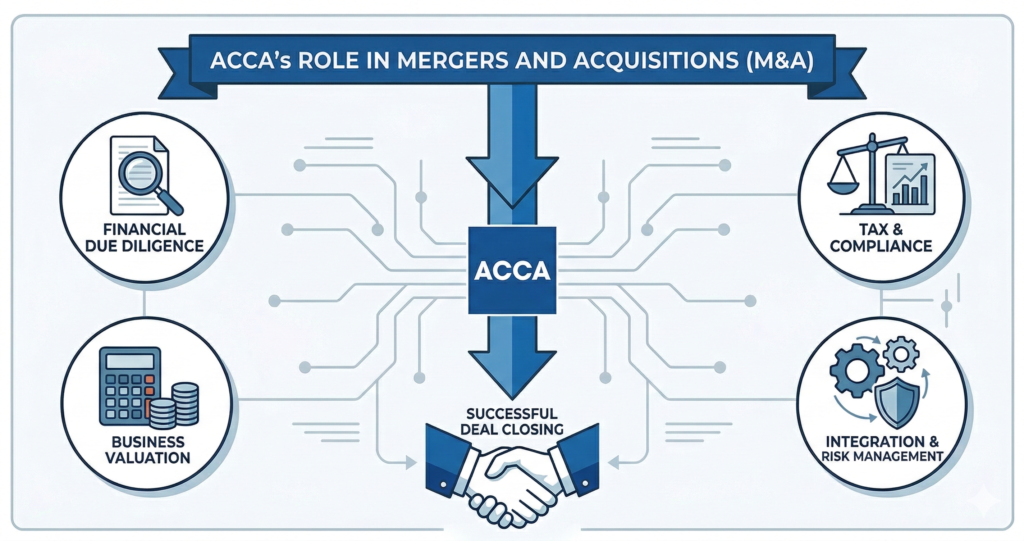
One of the most significant shifts in the finance industry is the move toward “Business Partnering.” ACCA candidates, particularly through the Strategic Business Leader (SBL) module, are trained to think like consultants. They don’t just work in the finance department; they work with the marketing, HR, and operations departments to drive value. This skill is critical when navigating complex scenarios like mergers or global expansions, where financial health must be balanced with operational reality.
3. Ethical Governance in a Deepfake Era
As technology advances, so do the risks of financial fraud. In 2026, ethics are not just a moral choice but a professional requirement. ACCA’s deep focus on professional ethics ensures that its members have the “Moral Quotient” to navigate the gray areas of corporate governance. Whether it’s flagging an aggressive revenue recognition practice or ensuring ESG (Environmental, Social, and Governance) transparency, the ACCA professional acts as the conscience of the organization, a role that AI simply cannot replace.
4. Global Regulatory Intelligence
With businesses operating across borders more than ever, the ability to interpret IFRS (International Financial Reporting Standards) and navigate various tax jurisdictions is invaluable. An ACCA professional in Mumbai can seamlessly collaborate with a team in London or Dubai because they speak the same global “financial language.” This regulatory agility is a primary reason why ACCA candidates are hired faster by Global Capability Centers (GCCs) that manage international operations from India.
5. Adaptive Communication & Emotional Intelligence (EQ)
The image of the “introverted accountant” is dead. Today’s finance leaders need high EQ to manage cross-functional teams and explain complex financial risks to non-financial stakeholders. ACCA hones this through case-study-based exams where students must draft memos, reports, and presentations for different audiences. Being able to communicate a $10 million risk to a Creative Director in a way they understand is a skill that directly translates to faster promotions and higher pay.
US CMA vs. Other Professional Courses
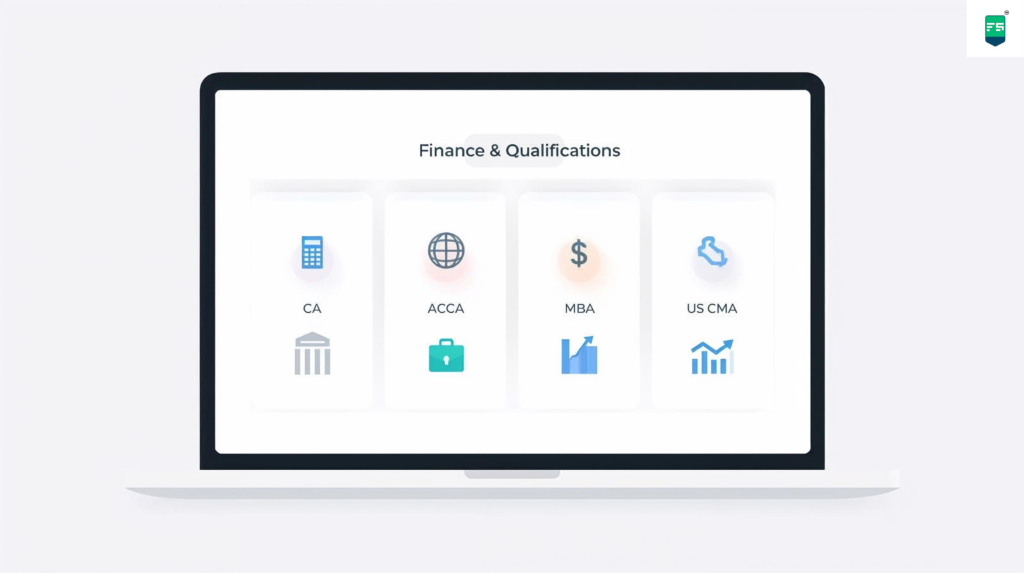
When comparing the US CMA (Certified Management Accountant) with other courses like CA or ACCA, the primary difference lies in the “Professional Identity” each course builds. While the Indian CA offers incredible depth in local regulations and taxation, and the ACCA provides a broad global accounting perspective, the US CMA is a “Strategic Sprint” focused on management and internal decision-making.
| Feature | US CMA | ACCA | Indian CA |
| Duration | 6–12 Months | 2–3 Years | 4–5 Years |
| Exams | 2 Parts | 13 Papers | Multiple Levels + 2-3 Yr Articleship |
| Primary Focus | Strategy, Budgeting, & ROI | Audit, Tax, & Global Reporting | Indian Law, Audit, & Taxation |
| Global Reach | 150+ Countries | 180+ Countries | Primarily India |
Why ACCA Candidates Get Hired Faster
The “secret sauce” behind the rapid hiring of ACCA candidates in 2026 is Day-1 Readiness. Employers are tired of spending months training fresh graduates on how the industry actually works. ACCA candidates get hired faster because:
- The Practical Experience Requirement (PER): Students are encouraged to work while they study, meaning they bring 36 months of real-world experience to the table upon qualification.
- Employer-Led Syllabus: The ACCA updates its syllabus annually based on feedback from thousands of global employers, ensuring students are learning what the market actually needs today.
- Global Standardization: Whether you are in India or the UK, the exam is the same. A recruiter at a Big 4 firm knows exactly what level of quality they are getting when they see “ACCA” on a resume.
Course Details: US CMA (2026 Updates)
The US CMA qualification, offered by the Institute of Management Accountants (IMA), is one of the most efficient pathways to a high-paying finance career. In 2026, the syllabus has been tightened to reflect the “Tech-Savvy Accountant” trend.
- Part 1: Financial Planning, Performance, and Analytics: This section now has a 25% weightage on Technology and Analytics (up from 15%). It covers everything from external reporting and budgeting to internal controls and AI applications in finance.
- Part 2: Strategic Financial Management: This focuses on high-level decision-making, including financial statement analysis, corporate finance, risk management, and professional ethics.
- Exam Format: Each part is a 4-hour exam consisting of 100 MCQs (75% weightage) and 2 Essay scenarios (25% weightage). A passing score is 360 out of 500.
US CMA: Facts vs. Myths
As the course grows in popularity, several myths have surfaced. Let’s debunk them with 2026 facts:
- Myth: “US CMA is only valid in the US.”
- Fact: In 2026, over 50% of CMAs are employed in Asia and the Middle East. It is highly sought after by global MNCs like Amazon, Deloitte, and Google.
- Myth: “It’s an easy course because it’s only two papers.”
- Fact: While the duration is shorter, the pass rate hovers around 45–50%. It requires deep conceptual clarity and the ability to apply management judgment to complex business scenarios.
- Myth: “You need to be a math genius.”
- Fact: You need to be a logic genius. Most calculations are handled by tools; your job is to interpret what those numbers mean for the company’s future.
How Not to Write ACCA Papers
Failing an ACCA paper is rarely about lack of knowledge—it’s usually about poor exam strategy.
- The Rote Learning Trap: Never regurgitate textbook definitions. If the question asks you to advise a “Tech Startup,” don’t give a generic answer. Use the data provided in the scenario to make your point.
- Ignoring the 1.8-Minute Rule: You have 180 minutes for a 100-mark paper. That’s 1.8 minutes per mark. If you spend 30 minutes on a 10-mark question, you have already lost the paper.
- Poor “Professional Skills” Execution: In the 2026 digital exams, formatting matters. Use the spreadsheet and word processor tools to present your answer like a professional report, not a college essay.
Why Pursue US CMA with a BCom?
For a BCom student, the US CMA is the ultimate “Career Accelerator.” A plain BCom degree often leads to entry-level data entry or basic accounting roles. However, BCom + US CMA transforms you into a Specialist.
- Faster Entry: You can complete the CMA within 6–9 months, often finishing it alongside your graduation.
- Salary Jump: A BCom graduate might start at ₹3–4 LPA, whereas a US CMA fresher can easily command ₹7–10 LPA in Big 4 firms or MNCs.
- Management Fast-Track: CMAs are trained for roles like FP&A (Financial Planning & Analysis), which is the direct path to becoming a CFO.
Job Profiles & Top Industries (2026)
The career scope for ACCA and US CMA professionals is vast, with opportunities in every major sector of the global economy.
Top Industries:
- Big 4 & Consulting: For Audit, Advisory, and Strategic Tax roles.
- Manufacturing & Supply Chain: Critical for Cost Accountants and Plant Controllers.
- Tech & E-commerce: High demand for FP&A managers to handle rapid scaling.
- BFSI (Banking & Insurance): For Risk Management and Treasury roles.
- Healthcare & Pharma: Managing the complex financial modeling of R&D and global distribution.
5 Countries with Great Pay for ACCA/CMA:
- Switzerland: High standard of living with salaries averaging $105,000+.
- United Arab Emirates: Tax-free income with high demand for compliance experts.
- United Kingdom: The hub for global finance, offering £50,000+ for newly qualified ACCAs.
- Singapore: The gateway to Asian finance, offering lucrative packages for strategic managers.
- USA: The home of CMA, where management accountants are central to corporate strategy.
Why Choose FinStreet Education?
Choosing where to study is as important as the course itself. At FinStreet, we take a “Mentorship First” approach. Our founder, Aditya Sir, focuses on making complex concepts feel like a conversation. We don’t believe in just covering the syllabus; we believe in making you “Corporate Ready.”
- Concept over Cramming: We use real-world case studies from 2025-2026 business headlines to teach accounting.
- ALP Status: As an approved partner, we offer students exclusive discounts on exam fees and access to official materials.
- Placement Cell: Our dedicated team works with top recruiters to ensure our students aren’t just “certified” but “employed.”
- Flexible Learning: Whether you prefer our Classroom Programs or our online virtual modules, you get the same level of personal attention.
Join the FinStreet family today and future-proof your career!
Conclusion: The 2026 Reality
The world is moving fast, and traditional degrees are no longer enough to secure a seat at the leadership table. Whether you choose the global breadth of ACCA or the strategic precision of US CMA, you are making an investment in yourself that will pay dividends for decades.
Would you like me to help you compare the registration fees for the upcoming 2026 ACCA or US CMA intake cycles?
This video provides a deep dive into the 2026 syllabus updates and global salary expectations for US CMA candidates, helping you visualize the ROI of this certification.