
Layoffs, Restructuring, and Cost Control: A US CMA Perspective on Corporate Survival


Introduction
Over the last few years, headlines around layoffs, restructuring, and cost cutting have become a regular part of business news. From global technology firms to manufacturing giants and financial institutions, organizations across industries have been forced to rethink how they operate, spend, and survive. Economic uncertainty, rising interest rates, margin pressure, and changing consumer behavior have made corporate survival more complex than ever.
While layoffs often attract the most attention, they are only one part of a much larger financial strategy. Behind every restructuring decision lies detailed cost analysis, cash flow planning, performance evaluation, and long term strategic thinking. This is where management accountants play a critical role.
From a US CMA perspective, layoffs and restructuring are not simply reactive measures. They are strategic tools aimed at preserving financial health, protecting cash flows, and ensuring long term sustainability. This blog explores how cost control and restructuring decisions are approached through the lens of a US CMA professional and how platforms like FinStreet help build these essential capabilities.
The Current Corporate Reality
The global business environment between 2023 and 2025 has been defined by uncertainty. High interest rates increased borrowing costs. Inflation squeezed margins. Supply chains remained volatile. Even profitable companies faced pressure to optimize costs and improve efficiency.
As a result, many organizations initiated restructuring programs. Some exited non core businesses. Others redesigned operating models or reduced workforce size. While these decisions are difficult, they are often necessary to protect the organization as a whole.
What is important to understand is that layoffs are usually the last step, not the first. Before any workforce decision is made, finance teams conduct deep analysis on cost structures, productivity, and long term financial impact.
This analytical responsibility largely falls on management accountants.
Understanding Cost Control Beyond Simple Cost Cutting
Cost control is often misunderstood as cutting expenses aggressively. In reality, effective cost control is about spending smarter, not just spending less.
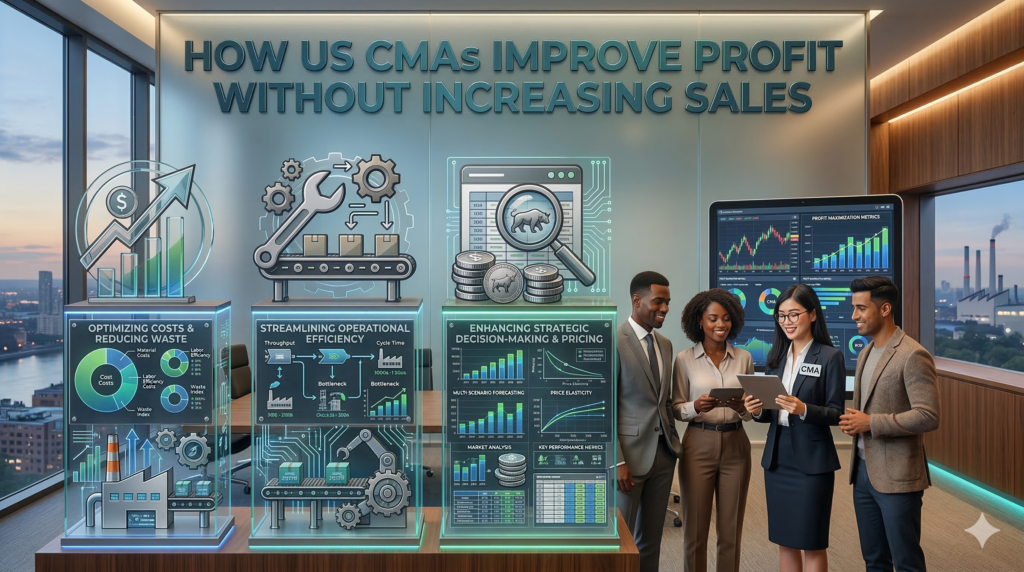
From a US CMA standpoint, cost control involves identifying value adding activities and eliminating inefficiencies. It requires understanding fixed and variable costs, analyzing contribution margins, and evaluating how each cost impacts profitability and cash flow.
For example, instead of reducing headcount immediately, a management accountant may recommend process automation, vendor renegotiation, or operational restructuring. These alternatives can achieve savings while preserving talent and productivity.
US CMA professionals are trained to view cost control as a strategic exercise rather than a short term reaction.
Restructuring as a Strategic Financial Decision
Corporate restructuring can take many forms. It may involve reorganizing departments, merging business units, divesting underperforming segments, or redesigning supply chains. Each decision has significant financial implications.
From a management accounting perspective, restructuring decisions are driven by performance data. Which products are generating value. Which units are draining cash. Which processes are inefficient.
US CMA professionals analyze segment profitability, return on investment, and cash flow sustainability before recommending restructuring actions. They also model future scenarios to assess whether the organization will be stronger after the changes.
This forward looking approach is what differentiates strategic restructuring from panic driven decisions.
The Human Side of Financial Decisions
Behind every cost control and restructuring decision are real people. This is something many finance students realize only when they enter the workforce.
A finance professional once shared how she was part of a cost optimization project during an economic slowdown. The objective was not to cut jobs immediately but to identify areas where resources were underutilized. By redesigning workflows and reallocating responsibilities, the company avoided large scale layoffs.
Her experience highlights an important truth. Strong financial analysis can reduce the human impact of restructuring. This is where skilled management accountants make a real difference.
Why US CMA Skills Are Critical During Crisis
US CMA training focuses heavily on decision making, performance management, and strategic planning. These skills become most valuable during periods of uncertainty.
Budgeting and Forecasting
During restructuring, accurate budgets and forecasts are essential. Management needs to understand how cost reductions will impact cash flow, profitability, and liquidity.
US CMA professionals build flexible budgets and rolling forecasts that adapt to changing conditions.
Performance Measurement
Key performance indicators help track whether restructuring efforts are working. US CMA professionals design metrics that focus on efficiency, productivity, and value creation rather than just expense reduction.
Scenario and Risk Analysis
Every restructuring decision carries risk. US CMA professionals use scenario analysis to evaluate best case, worst case, and most likely outcomes. This helps leadership make informed decisions rather than emotional ones.
Layoffs Through a Management Accounting Lens
Layoffs are often portrayed as purely financial decisions. In reality, they are complex trade offs between short term savings and long term capability.
From a US CMA perspective, workforce decisions are evaluated based on productivity metrics, cost per output, and strategic importance of roles. The goal is to align human resources with organizational strategy.
Poorly planned layoffs can increase costs in the long run through lower morale, lost expertise, and reduced innovation. Well planned restructuring focuses on sustainability, not just immediate savings.
This balanced approach is central to management accounting.
How FinStreet Prepares Professionals for These Challenges
FinStreet understands that real world finance is not limited to textbook problems. It involves difficult decisions, uncertainty, and responsibility.
Through its US CMA focused programs, FinStreet helps students develop strong foundations in cost management, performance analysis, and strategic decision making. These skills are essential during restructuring and crisis situations.
FinStreet emphasizes practical understanding rather than rote learning. Case discussions, real business examples, and concept driven teaching help students see how financial tools are applied in real organizations.
Beyond technical knowledge, FinStreet also supports professional growth through mentorship and career guidance. This prepares students to handle high pressure roles where financial decisions directly impact business survival.
To learn more about how FinStreet supports US CMA aspirants and finance professionals, visit
https://finstreeteducation.com
Cost Control as a Long Term Discipline
One important lesson from recent corporate restructuring trends is that cost control should not be reactive. Organizations that practice continuous cost management are better prepared for downturns.
US CMA professionals advocate for ongoing performance monitoring, regular cost reviews, and alignment between strategy and spending. This proactive approach reduces the need for drastic measures during crises.
Finance professionals who understand this philosophy become trusted advisors rather than crisis managers.
Conclusion
Layoffs, restructuring, and cost control are difficult but necessary realities in today’s business environment. However, these actions should never be impulsive or purely reactive.
From a US CMA perspective, corporate survival depends on informed decision making, strong financial analysis, and a clear understanding of long term value creation. Management accountants play a crucial role in guiding organizations through uncertainty with discipline and insight.
For finance professionals and students, developing these skills is no longer optional. With the right education and guidance from platforms like FinStreet, aspiring US CMAs can build the confidence and competence needed to lead organizations through challenging times.
In an era where financial decisions shape the future of businesses and people, strategic finance professionals will always remain essential.