
Activity Based Costing vs Traditional Costing and Their Real World Impact on Business Decisions

Introduction
Costing may sound like a technical accounting topic, but in reality, it directly shapes how businesses price products, evaluate profitability, and make strategic decisions. Many companies unknowingly make poor decisions not because their products are weak, but because their costing methods do not reflect reality.
Two of the most commonly discussed costing methods are Traditional Costing and Activity Based Costing. While both aim to allocate costs, they do so in very different ways, leading to very different outcomes.
This blog explains the difference between Activity Based Costing and Traditional Costing, highlights their real world impact on business decisions, and shows why choosing the right costing method matters more than ever. Through relatable examples and practical insights, we also explore how finance professionals can build strong costing expertise with the help of platforms like Finstreet.
Understanding Why Costing Methods Matter
Costing methods determine how indirect costs such as rent, utilities, supervision, and support functions are assigned to products or services. These costs often form a large portion of total expenses, especially in modern businesses.
If costs are allocated inaccurately, management may believe that profitable products are loss making or that inefficient operations are performing well. This leads to incorrect pricing, poor investment decisions, and long term strategic damage.
Costing is not just an accounting exercise. It is a decision making tool.
What Is Traditional Costing
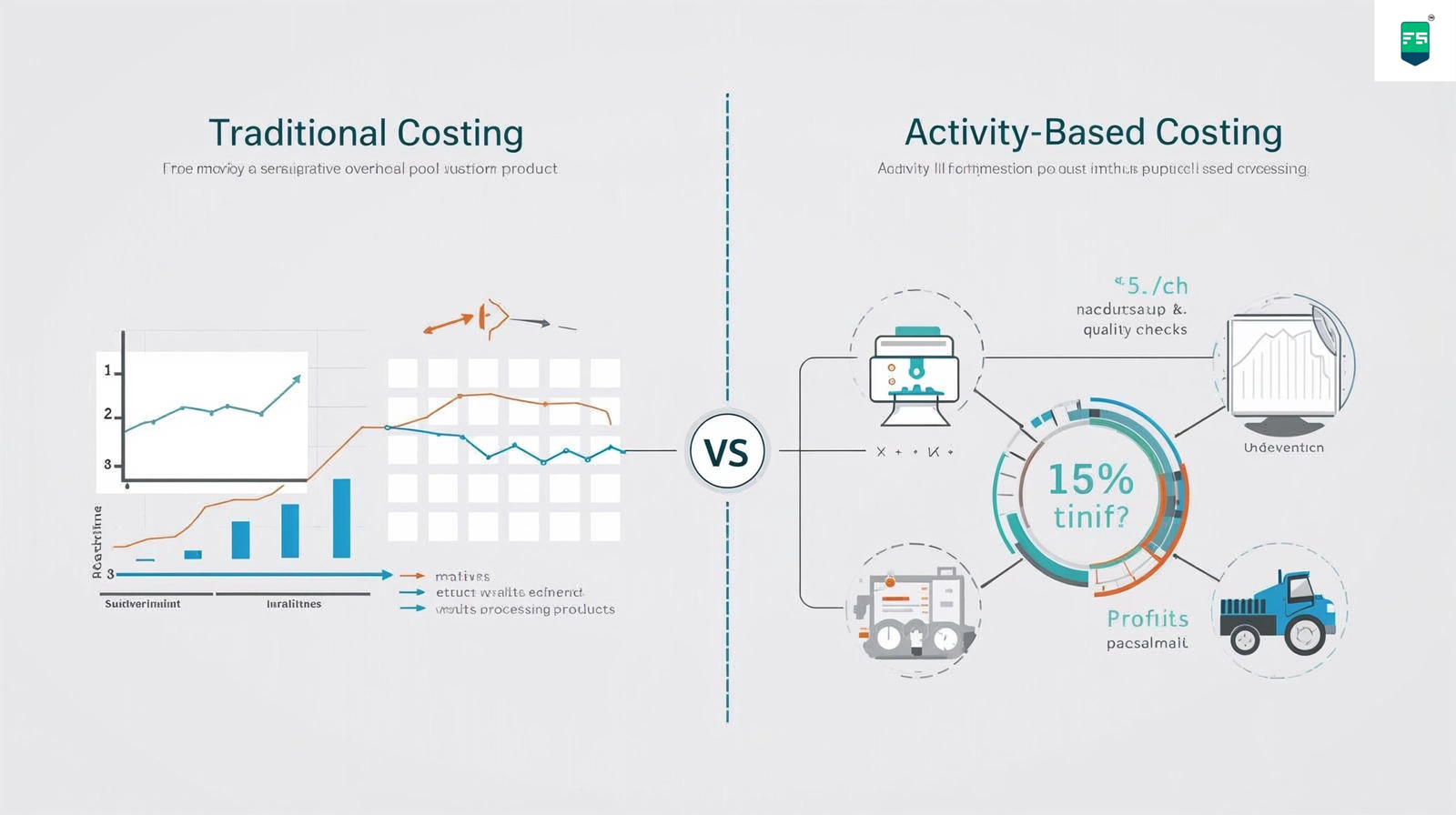
Traditional costing allocates overhead costs using a single cost driver. Common drivers include machine hours, labor hours, or units produced.
This method assumes that products consume overhead resources in proportion to the chosen driver. While simple and easy to implement, this assumption often fails in complex business environments.
Traditional costing works reasonably well in businesses with a single product or similar production processes. However, as product diversity and overhead complexity increase, accuracy decreases.
What Is Activity Based Costing
Activity Based Costing allocates costs based on activities that actually consume resources. Instead of using one broad driver, ABC identifies key activities such as machine setup, quality inspections, order processing, and customer support.
Costs are first assigned to these activities and then allocated to products or services based on how much they use each activity.
Although ABC requires more data and effort, it provides far more accurate insights into cost behavior and profitability.
Key Differences Between Traditional Costing and Activity Based Costing
| Basis of Comparison | Traditional Costing | Activity Based Costing |
| Cost allocation | Single cost driver | Multiple activity drivers |
| Accuracy | Lower in complex environments | High accuracy |
| Overhead visibility | Limited | Detailed |
| Implementation effort | Simple | More complex |
| Decision making support | Basic | Strategic and detailed |
This comparison shows why many modern organizations are moving toward Activity Based Costing.
A Real World Example of Costing Impact
A manufacturing company producing both standard and customized products relied on traditional costing using machine hours. According to their reports, customized products appeared highly profitable, while standard products showed low margins.
However, a management accountant suggested implementing Activity Based Costing. The ABC analysis revealed that customized products required significantly more setup time, design support, quality checks, and customer coordination. These costs were previously spread across all products.
Once costs were allocated accurately, management realized that customized products were far less profitable than assumed. The company revised its pricing strategy, improved process efficiency, and focused on standard products with sustainable margins.
This single change in costing approach led to better pricing decisions and improved overall profitability.
Impact on Pricing Decisions
Pricing decisions rely heavily on accurate cost information. Traditional costing may underestimate the cost of complex products and overestimate the cost of simpler ones.
As a result, businesses may price complex products too low and simple products too high. This can drive customers away from profitable products and attract them to loss making ones.
Activity Based Costing helps businesses set prices that reflect actual resource consumption. This ensures sustainable margins and better competitive positioning.
Finance professionals trained in advanced costing techniques often play a crucial role in correcting such pricing distortions. Learning platforms like Finstreet focus on practical costing applications that prepare professionals for these real business challenges. More details can be found at https://www.finstreet.in.
Impact on Product and Customer Profitability Analysis
Traditional costing often hides the true cost of serving different customers. Some customers place frequent small orders, demand customization, or require extensive support. These activities increase costs but may not be visible under traditional methods.
Activity Based Costing highlights these differences. It helps businesses identify which customers are truly profitable and which ones consume disproportionate resources.
A service company discovered through ABC analysis that a small group of customers generated high revenue but low profitability due to constant service requests and customization. Armed with this insight, management renegotiated contracts and improved service efficiency.
This demonstrates how ABC supports smarter customer management.
Impact on Strategic Decision Making
Strategic decisions such as product discontinuation, outsourcing, or process improvement depend on accurate cost data.
Under traditional costing, management may discontinue a product that appears unprofitable but actually contributes positively when analyzed correctly. Similarly, outsourcing decisions may be flawed if internal costs are overstated or understated.
Activity Based Costing provides clarity by linking costs to activities. This enables managers to identify inefficient processes and target improvements effectively.
In many organizations, ABC becomes a foundation for continuous improvement initiatives and operational excellence.
Challenges in Implementing Activity Based Costing
Despite its benefits, Activity Based Costing is not without challenges. It requires detailed data collection, cross functional cooperation, and ongoing maintenance.
Some organizations abandon ABC because it feels complex or time consuming. However, with modern software tools and better data systems, implementation has become more manageable.
The key is to start simple and focus on major cost drivers rather than attempting to track every minor activity.
When Traditional Costing Still Makes Sense
Traditional costing is not outdated or useless. In simple environments with low overhead and limited product variety, it remains effective and efficient.
Small businesses or early stage startups may prefer traditional costing due to its simplicity. The important point is not which method is superior, but which method is appropriate for the business context.
Understanding both methods allows finance professionals to recommend the right approach rather than blindly following one system.
Role of Management Accountants in Choosing the Right Costing Method
Management accountants play a critical role in selecting and implementing costing systems. They evaluate business complexity, cost structure, and decision making needs.
Their responsibility goes beyond calculation. They must explain costing insights to non finance managers and show how cost information influences decisions.
Professional training that emphasizes real world costing scenarios helps build this capability. Finstreet integrates practical case studies and decision oriented learning to help finance professionals understand how costing impacts business outcomes.
Preparing for the Future of Costing
As businesses adopt automation, analytics, and digital transformation, costing systems are also evolving. Activity Based Costing is increasingly integrated with data analytics to provide real time cost insights.
Finance professionals who understand advanced costing techniques will be better positioned to support strategic decisions and drive value creation.
Learning platforms like Finstreet help learners stay relevant by focusing on applied costing knowledge rather than rote calculations.
Conclusion
The choice between Traditional Costing and Activity Based Costing has a significant impact on how businesses understand costs, price products, and make strategic decisions.
Traditional costing offers simplicity, while Activity Based Costing provides accuracy and deeper insight. In complex and competitive environments, relying solely on traditional methods can lead to distorted decisions and reduced profitability.
Businesses that adopt the right costing approach gain clarity, control, and confidence in decision making. Finance professionals who master both methods become valuable strategic partners rather than just cost reporters.
In a world where margins are tight and competition is intense, accurate costing is not optional. It is essential. Platforms like Finstreet play an important role in preparing finance professionals to apply costing techniques effectively in real business environments.