
ESG Reporting Is No Longer Optional What CMAs Need to Know

A few years ago, when a global consumer goods company faced backlash for poor labor practices in its supply chain, the impact was immediate. Stock prices dropped, investors questioned leadership decisions, and regulators stepped in. What surprised many was that the company was financially profitable. Yet, its failure was not financial. It was environmental, social, and governance related.
This is the reality businesses face today. Profitability alone is no longer enough. Stakeholders want to know how responsibly a company operates, how it treats people, and how transparent its leadership is. This shift has made ESG reporting an essential part of corporate reporting and strategic decision making.
For finance professionals and especially US CMA aspirants, ESG reporting is no longer an optional topic or a future trend. It is a present day requirement shaping careers and corporate expectations.
Students who want to understand how modern finance roles are evolving often explore structured programs like the US CMA offered by FinStreet, which connects financial knowledge with emerging global practices.
https://finstreet.in/us-cma
Why ESG Reporting Has Become a Global Priority
ESG reporting gained momentum after major global events exposed weaknesses in corporate responsibility. Climate change concerns, data privacy breaches, workplace safety issues, and governance scandals pushed regulators and investors to demand more transparency.
Governments across regions are introducing mandatory ESG disclosures. Investors are using ESG scores to assess long term risk. Consumers are choosing brands aligned with ethical values. Employees prefer organizations that demonstrate social responsibility.
In this environment, ESG reporting has moved from being a voluntary sustainability report to a structured disclosure integrated with financial reporting.
Finance professionals who understand this shift are better prepared for leadership roles. FinStreet focuses on building this awareness early by linking CMA concepts with real world business expectations.
https://finstreet.in
Understanding ESG Reporting in Simple Terms
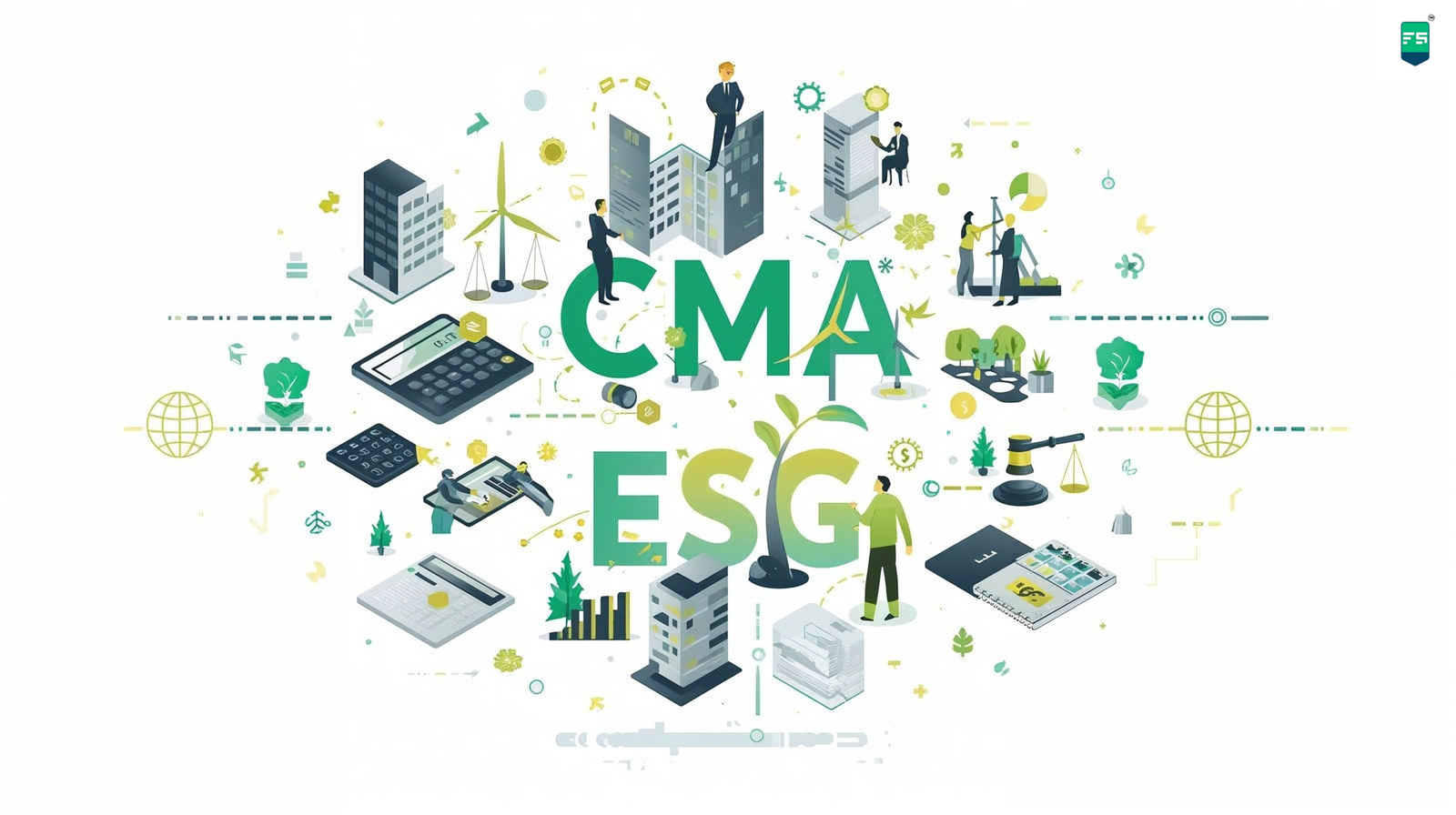
ESG reporting evaluates a company’s performance across three dimensions.
Environmental factors include energy usage, carbon emissions, waste management, water conservation, and sustainability initiatives.
Social factors focus on employee welfare, diversity, labor practices, customer data protection, and community engagement.
Governance factors cover board structure, ethical conduct, internal controls, executive compensation, and risk management practices.
Together, these factors provide a holistic view of how sustainable and resilient a business truly is.
US CMA training emphasizes understanding both financial and non financial performance, which makes CMAs naturally suited for ESG related roles. Programs like FinStreet’s US CMA course integrate such modern finance topics into traditional accounting learning.
https://finstreet.in/us-cma
Real World Example of ESG in Action
A well known technology company recently announced aggressive carbon neutrality goals. While the initiative appeared environmental, its impact was deeply financial. Significant capital investment was required, operating costs changed, and long term savings were projected through energy efficiency.
Management accountants played a crucial role by budgeting these initiatives, forecasting long term returns, and reporting performance metrics to stakeholders.
This example shows that ESG reporting is not separate from finance. It is deeply integrated with planning, budgeting, forecasting, and performance evaluation.
Learning how to connect such real world examples with theory is a key strength of FinStreet’s CMA focused learning approach.
https://finstreet.in
The Role of CMAs in ESG Reporting
ESG reporting requires structured data, consistency, internal controls, and performance analysis. These are core strengths of management accountants.
CMAs help organizations identify relevant ESG metrics, design measurement systems, and integrate ESG performance into management reports.
They ensure ESG data is reliable, comparable, and decision useful. They also help management understand how ESG initiatives affect costs, risks, and long term value.
This strategic role moves CMAs beyond traditional accounting into advisory positions.
FinStreet prepares students for this shift by emphasizing application based learning and case discussions that reflect current corporate practices.
https://finstreet.in/us-cma
ESG and the US CMA Syllabus Connection
Although ESG may not appear as a standalone chapter, its concepts are deeply embedded across the US CMA syllabus.
In Part One, cost management helps evaluate environmental initiatives. Performance management supports tracking social metrics. Internal controls ensure governance related data accuracy.
In Part Two, enterprise risk management, ethics, and corporate governance align directly with ESG reporting requirements.
This integrated approach makes US CMAs highly relevant in today’s sustainability driven business environment.
Students trained through FinStreet gain clarity on how syllabus concepts translate into emerging finance roles.
https://finstreet.in
ESG Metrics and Performance Measurement
Measuring ESG performance requires defining clear metrics.
| ESG Area | Example Metrics |
|---|---|
| Environmental | Carbon emissions energy usage waste reduction |
| Social | Employee turnover training hours safety incidents |
| Governance | Board independence audit effectiveness compliance |
CMAs play a critical role in ensuring these metrics are measurable, auditable, and aligned with organizational goals.
FinStreet helps students understand how to evaluate and interpret such metrics using management accounting frameworks.
https://finstreet.in/us-cma
Integrating ESG into Budgeting and Forecasting
ESG initiatives involve financial commitments. Environmental projects require capital budgeting. Social initiatives affect operating costs. Governance improvements influence risk management expenses.
CMAs assess these initiatives using budgeting and forecasting tools to ensure alignment with long term strategy.
| ESG Initiative | Financial Impact Area |
|---|---|
| Renewable energy | Capital budgeting cash flow planning |
| Employee programs | Operating budgets productivity forecasts |
| Governance reforms | Risk cost compliance budgeting |
This integration highlights why ESG reporting cannot be separated from financial planning.
Understanding this integration is a core learning outcome in FinStreet’s US CMA training.
https://finstreet.in
ESG Reporting Flow for Better Understanding
Here is a simple flowchart explanation of how ESG reporting works in practice.
Business activities generate environmental social and governance data.
This data is collected across departments.
CMAs standardize and measure the data using defined metrics.
Internal controls ensure accuracy and consistency.
Data is integrated into management reports.
Final ESG disclosures are prepared for stakeholders.
This flow shows why ESG reporting needs finance professionals with strong analytical and control skills.
FinStreet uses similar simplified frameworks to help students grasp complex reporting concepts easily.
https://finstreet.in/us-cma
Challenges in ESG Reporting
One major challenge is data quality. ESG data often comes from non finance departments and may lack structure.
Another challenge is linking ESG performance to financial outcomes. Management may struggle to see measurable value without proper analysis.
CMAs address these challenges by applying control systems, cost analysis, and performance measurement techniques.
Learning how to overcome these challenges early gives US CMA students a strong career advantage.
FinStreet emphasizes practical problem solving to prepare students for such real world complexities.
https://finstreet.in
Why ESG Knowledge Matters for US CMA Careers
Employers increasingly expect finance professionals to understand sustainability and governance issues.
Roles in corporate finance, consulting, and leadership now require ESG awareness.
US CMA aspirants who develop ESG skills position themselves for future focused roles rather than traditional accounting positions.
FinStreet supports this career readiness by aligning CMA preparation with evolving industry expectations.
https://finstreet.in/us-cma
How FinStreet Helps Students Master ESG and Modern Finance
FinStreet goes beyond exam preparation by connecting CMA concepts with current business realities.
Through structured learning, case studies, and industry context, students learn how ESG reporting fits into financial decision making.
FinStreet also supports learning through digital platforms and content channels.
Website for program details
https://finstreet.in
Instagram for finance awareness and student updates
https://www.instagram.com/finstreetofficial
YouTube for CMA concept explanations and career guidance
https://www.youtube.com/@finstreet
Final Thoughts
ESG reporting is no longer a choice. It is becoming a fundamental part of how businesses measure success, manage risk, and build trust.
For CMAs, this shift opens new opportunities to lead sustainability driven financial decision making.
Those who understand ESG today will shape the finance profession tomorrow.
With the right guidance and industry aligned learning from platforms like FinStreet, US CMA aspirants can confidently step into this evolving role and stay ahead in their careers.