
Top In-Demand Accounting Skills Every US CMA Aspirant Must Master in 2025


Introduction
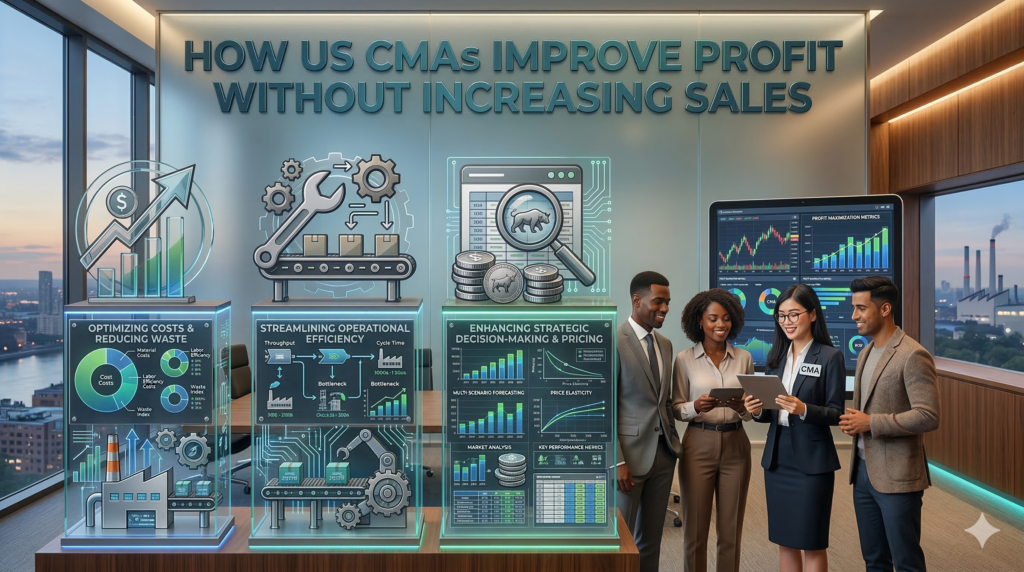
The accounting profession has entered a new era—an era shaped by automation, global markets, and data-driven decision-making. Today, CMA professionals are expected to operate at the intersection of finance, strategy, and technology. This shift has redefined what skills truly matter in the industry.
For US CMA aspirants, mastering these in-demand accounting competencies is no longer optional—it is the foundation of a long-term, global career. This blog explores the most essential skills employers prioritize in 2025 and how FinStreet prepares students for them through practical, industry-focused training.
The Top In-Demand Accounting Skills for 2025
1. Financial Reporting and Analytical Insight
Financial reporting remains the core skill every US CMA must possess, but the expectation today goes far beyond preparing statements. Companies need professionals who can interpret, diagnose, and strategize using financial data.
Why it’s important
Financial statements reveal:
- Profitability
- Liquidity
- Operational efficiency
- Cash flow sustainability
- Business risks
CMA students must be able to explain the implications of these metrics to management.
A quick comparison chart
| Skill Component | Importance Level | What Employers Expect |
| IFRS/GAAP Knowledge | Very High | Accurate reporting, compliance |
| Ratio Analysis | High | Business insights, financial health |
| Interpretation | Very High | Strategic decision-making |
| Reporting Tools | Medium | Excel, dashboards, ERP outputs |
Strong fundamentals can be built through resources like Investopedia or professional finance portals.
2. Cost Management and Budgeting
In a volatile economy, companies depend heavily on cost-efficient operations. That’s why cost accounting is one of the most sought-after skill sets for CMA graduates.
Core areas a US CMA must master
- Standard costing
- Variance analysis
- Budget design and tracking
- Flexible budgeting
- Break-even, margin & CVP analysis
Visual: Cost Control Cycle
Cost Identification → Cost Measurement → Analysis → Optimization → Reporting
Professionals who excel here quickly transition into roles such as Cost Analyst, FP&A Analyst, or Business Controller.
3. Data Analytics and Financial Modeling
Data analytics has become a defining competency for modern finance teams. Employers expect CMAs to be comfortable working with large datasets and converting them into actionable business intelligence.
Key tools and skills
- Advanced Excel (INDEX-MATCH, Power Query, What-If Analysis)
- Power BI dashboards
- Scenario planning
- Forecast modeling
- Trend analysis
These skills are immediately relevant for roles in FP&A, valuation, finance consulting, and strategic planning.
Mini Graphic: Financial Modeling Structure
Inputs → Assumptions → Calculations → Scenarios → Outputs → Decision
Students can explore advanced concepts through Corporate Finance Institute and similar platforms.
4. Technology Proficiency: ERP, Automation & AI
The modern accountant must understand how technology powers finance ecosystems. ERP literacy and automation awareness are considered non-negotiable in many global organizations.
Common tools CMAs should know
- SAP
- Oracle Financials
- QuickBooks
- Tally Prime
- Zoho Books
- RPA automation tools
- Cloud-based reconciliation systems
Why this matters
Technology-savvy accountants help companies:
- Reduce errors
- Speed up reporting
- Enhance compliance
- Improve forecasting accuracy
Candidates who know ERP workflows are up to 40% more employable in multinational companies.
5. Regulatory Compliance and Risk Management
Finance professionals are responsible not only for reporting numbers but also for protecting the organization from financial, regulatory, and operational risks.
Key areas a US CMA should understand
- Internal controls
- SOX compliance
- GST framework
- US tax basics (for international roles)
- Audit trails
- Fraud detection & preventive controls
With increasing regulations, compliance-oriented roles such as Internal Auditor and Risk Analyst are among the most recession-proof positions in finance.
Compliance Focus Areas Table
| Compliance Area | What US CMA Students Should Know | Industry Examples |
| Internal Control Systems | Segregation of duties, approvals | Corporate governance |
| Audit Processes | Documentation, testing | Internal, statutory audits |
| Taxation | Direct & indirect tax logic | GST filings, US tax basics |
| Risk Assessment | Fraud indicators, risk matrices | Internal audit, SOX |
6. Business Communication and Financial Storytelling
Accounting is no longer a back-office function. Today’s finance professionals must communicate insights clearly to non-finance stakeholders.
This is where the skill of financial storytelling becomes vital.
Essential communication abilities
- Writing clear reports
- Delivering concise presentations
- Explaining financial trends
- Answering management questions confidently
- Structuring insights logically
Hiring managers consistently rate communication as a top differentiator in interviews.
7. Strategic Decision-Making and Leadership
CMA-qualified professionals are increasingly taking on roles that require strategic thinking, not just technical accounting.
Strategic skills employers value
- Evaluating investment proposals
- Capital budgeting decisions
- Scenario-based decision models
- Competitor benchmarking
- Long-term planning & forecasting
These strategic capabilities accelerate growth into leadership roles such as FP&A Manager, Finance Business Partner, or Strategy Analyst.
Why FinStreet?
Where US CMA Aspirants Become Industry-Ready Professionals**
Most institutions teach syllabus. FinStreet teaches strategy.
And that’s what makes the difference.
Explore FinStreet at https://finstreeteducation.com/
1. Skill-Based US CMA Training Beyond the Syllabus
FinStreet integrates practical skills—analytics, modeling, strategy, dashboards—into the CMA curriculum. Students are trained to think like corporate finance professionals, not just exam candidates.
More about the program- https://finstreeteducation.com/
2. Mentorship from Industry Leaders
FinStreet offers access to:
- 1:1 mentoring
- Weekly doubt-solving sessions
- Personalized study strategies
- Career roadmap planning
This level of academic and professional guidance distinguishes FinStreet as a premium CMA platform.
3. Complete Support Ecosystem
FinStreet’s system solves the biggest pain points faced by US CMA students:
- Daily doubt support
- 24/7 faculty interaction
- Structured revision plans
- Mock exams with analytics
- Accountability tracking
This ensures no student falls behind.
4. High Success Rate Through Structured Learning
FinStreet’s pass rate is one of the best in the CMA ecosystem in India. The institute’s result-driven framework makes learning organized, predictable, and efficient.
Check results and success stories here: https://finstreeteducation.com/
5. Unique Differentiators That Set FinStreet Apart
FinStreet offers advantages that typical US CMA institutes do not:
- Finance career orientation
- Practical skills training
- Resume, LinkedIn & internship support
- Digital planners and trackers
- Premium CMA student community
- Personal branding guidance
This positions FinStreet as the leading CMA institute for ambitious students.
Conclusion
The accounting profession is transforming, and US CMA aspirants must evolve with it. Mastering these in-demand accounting skills—finance analytics, reporting, compliance, technology, and strategic decision-making—can significantly elevate your career trajectory.
To build these competencies with the right guidance, mentorship, and structure, FinStreet provides the perfect ecosystem for long-term success.
Enroll in FinStreet’s US CMA Program today.
Book a free counselling session.
Dreams become real when effort meets the right direction. At FinStreet, we guide you toward the future you once imagined.