
US CMA vs Other Professional Courses: Which One Should You Choose?


Introduction
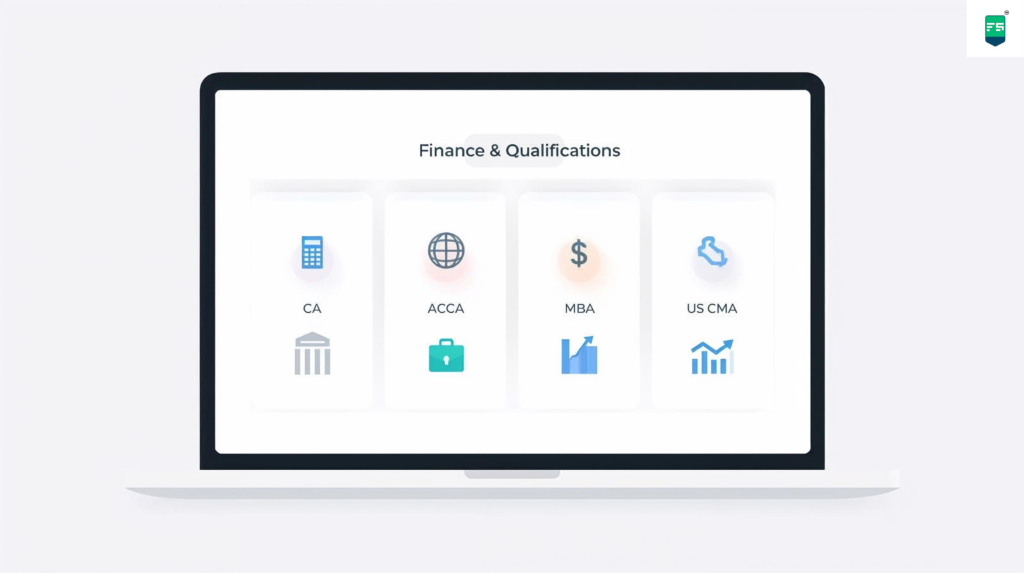
When it comes to building a career in finance and accounting, professionals and students often face a tough choice. Should you pursue CA, ACCA, MBA, or US CMA? Each course has its advantages, but the decision should be based on career goals, skill development, global recognition, and industry demand.
The US CMA (Certified Management Accountant) has emerged as a top choice for many professionals looking to move beyond traditional accounting roles. Unlike other courses that focus primarily on compliance, taxation, or theoretical knowledge, the US CMA equips candidates with strategic finance, management accounting, and decision-making skills.
In this blog, we compare US CMA with other professional courses, explain its unique advantages, and highlight why it has become a preferred choice for aspirants worldwide.
US CMA vs CA (Chartered Accountant)
Focus:
- CA primarily focuses on auditing, taxation, and regulatory compliance.
- US CMA focuses on management accounting, strategic decision-making, and business finance.
Global Recognition:
- CA is highly recognized in India and certain Commonwealth countries.
- US CMA is globally recognized, especially in the US, Middle East, and multinational companies.
Career Opportunities:
- CA typically leads to roles in auditing, taxation, or finance advisory.
- US CMA leads to strategic roles such as financial controller, CFO, finance manager, and FP&A specialist.
Exam Flexibility:
- CA exams are heavily structured, with a fixed schedule and hierarchical levels.
- US CMA exams are flexible; candidates can attempt them at any time during the year with just two parts to clear.
Table Comparison: US CMA vs CA
| Feature | CA | US CMA |
| Focus | Audit, Tax, Compliance | Management Accounting, Strategic Finance |
| Global Recognition | Primarily India & Commonwealth | Worldwide (especially US & Multinationals) |
| Exam Structure | Multiple levels, rigorous syllabus | 2 parts, flexible schedule, practical focus |
| Career Path | Auditor, Tax Consultant | CFO, Financial Analyst, FP&A, Controller |
| Preparation Style | Heavy theory | Application-based, scenario-driven |
US CMA vs ACCA
Focus:
- ACCA focuses on financial reporting, auditing, taxation, and financial management with global accounting standards.
- US CMA focuses more on management accounting, budgeting, cost management, and strategic decision-making.
Industry Relevance:
- ACCA is well-suited for auditing and finance roles in multinational corporations.
- US CMA is preferred for finance leadership, strategic planning, and management roles.
Exam Style:
- ACCA exams are spread over 13 papers, with some exams heavily theoretical.
- US CMA has two parts with an emphasis on practical application and decision-making.
Career Flexibility:
- ACCA provides global mobility and compliance expertise.
- US CMA adds a strategic finance edge, making it suitable for leadership roles and entrepreneurial ventures.
US CMA vs MBA
Focus:
- MBA programs are broad, covering marketing, HR, operations, strategy, and finance.
- US CMA is specialized, focusing solely on finance and accounting with decision-making and strategic application.
Cost and Duration:
- MBA programs can cost anywhere from $20,000 to $100,000 and take 1–2 years full-time.
- US CMA costs significantly less and can be completed in 6–12 months with disciplined study.
Career ROI:
- MBA graduates often start in managerial roles but may need finance-specific knowledge for senior finance positions.
- US CMA gives direct entry into strategic finance roles, often with higher pay in mid-level positions.
Table Comparison: US CMA vs MBA
| Feature | MBA | US CMA |
| Focus | General Management | Strategic Finance & Management Accounting |
| Duration | 1–2 Years | 6–12 Months |
| Cost | $20,000–$100,000 | $2,000–$5,000 approx. |
| Career Path | Managerial roles across functions | CFO, Controller, Financial Analyst, FP&A |
| Skill Development | Broad business knowledge | Deep finance & strategic skills |
Why US CMA Stands Out
- Global Recognition: Employers worldwide recognize CMA as a mark of finance and strategic expertise.
- Strategic Finance Skills: Unlike traditional accounting courses, CMA teaches how to drive business decisions using financial insights.
- Faster Career Growth: Companies often promote CMAs faster due to their ability to analyze, strategize, and improve profitability.
- Flexible Exam Schedule: The two-part exam system allows candidates to plan their preparation according to their convenience.
- Practical Application: CMAs focus on real-world business scenarios, ensuring candidates are job-ready from day one.
Real-Life Example
Consider Rohan, an ACCA-qualified professional in India. While ACCA helped him secure an auditing role, he struggled to move into a strategic finance position. After completing his US CMA, he transitioned into FP&A at a multinational, leading budgeting, forecasting, and cost optimization projects. The US CMA equipped him with the tools and mindset to influence business decisions, which ACCA alone did not provide.
Platforms like Finstreet help aspirants prepare efficiently for US CMA exams, providing structured courses, practice questions, and real-world case studies to accelerate learning and career readiness. (https://www.finstreet.in)
Conclusion
Choosing the right professional course is less about following trends and more about aligning with your career goals. While CA, ACCA, and MBA have their advantages, US CMA stands out for its strategic focus, global recognition, practical application, and career growth potential.
For those aiming to move beyond traditional accounting into leadership roles, US CMA is not just an option—it’s a game-changer. Smart preparation, application of concepts, and guidance from platforms like Finstreet can help aspirants unlock the full potential of this prestigious certification.