
Why Employers Value Management and Strategic Accountants Over Bookkeepers


In early 2025, a well known global technology company announced that it had successfully automated nearly 70 percent of its routine accounting operations across multiple countries. Bookkeeping, reconciliations, and standard reporting were now handled almost entirely by cloud based systems. However, what caught attention was not the automation itself, but what followed. The company significantly increased hiring for management accountants, financial analysts, and strategic finance professionals. This shift reflects a powerful reality shaping today’s job market. Employers are no longer focused on who can record transactions. They are focused on who can interpret them and guide business decisions.
I have personally witnessed this transition while interacting with recruiters and finance leaders. One CFO shared that bookkeeping skills are now assumed, but strategic thinking is rare and highly valued. This explains why management and strategic accountants are becoming indispensable to organizations across industries. Certifications like US CMA and ACCA are gaining strong preference because they develop exactly these capabilities. Employers are not replacing accountants. They are upgrading their expectations.
The Declining Role of Traditional Bookkeeping
Bookkeeping has always been a foundational part of accounting. Recording transactions, maintaining ledgers, and ensuring accuracy were once time consuming tasks requiring significant manpower. Today, automation has transformed this space. AI powered accounting software can process invoices, reconcile bank statements, and generate reports faster and with fewer errors than manual processes.
From an employer’s perspective, bookkeeping is now a support function rather than a strategic one. While accuracy remains important, it no longer creates competitive advantage. As businesses face tighter margins, volatile markets, and complex regulations, employers are asking deeper questions. Why are costs rising in one department. Which product line is underperforming. How will inflation or interest rate changes impact cash flows. These questions require analytical and strategic skills that go far beyond bookkeeping.
What Employers Expect from Modern Finance Professionals
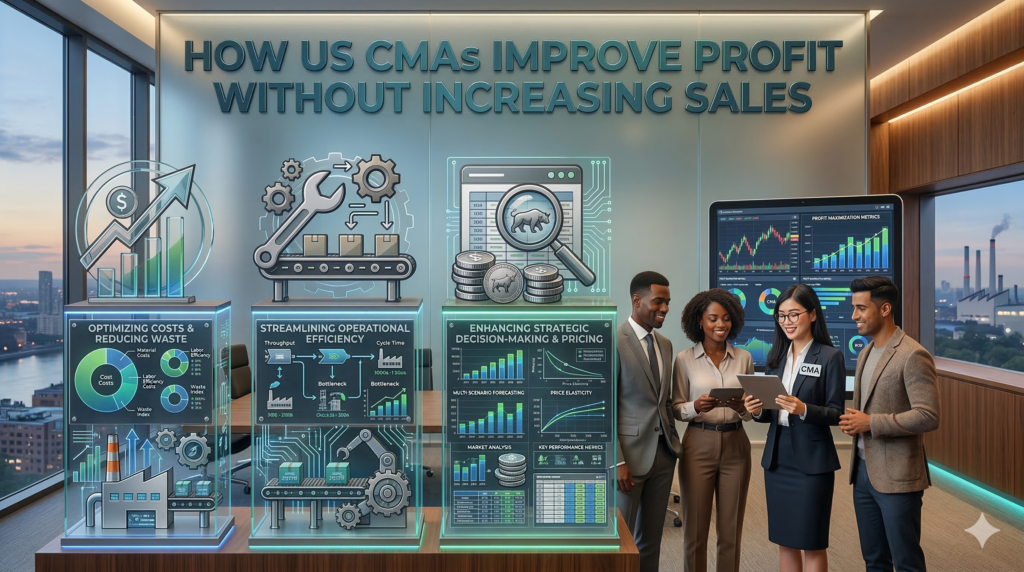
Today’s employers expect finance professionals to act as business partners. This means understanding operations, strategy, and market dynamics alongside financial data. Management and strategic accountants are trained to bridge the gap between numbers and business decisions.
Unlike bookkeepers who focus on historical data, management accountants focus on the future. They analyze trends, build forecasts, evaluate risks, and support leadership in decision making. Strategic accountants contribute to pricing strategies, capital allocation, performance measurement, and long term planning. This proactive role is what employers value most.
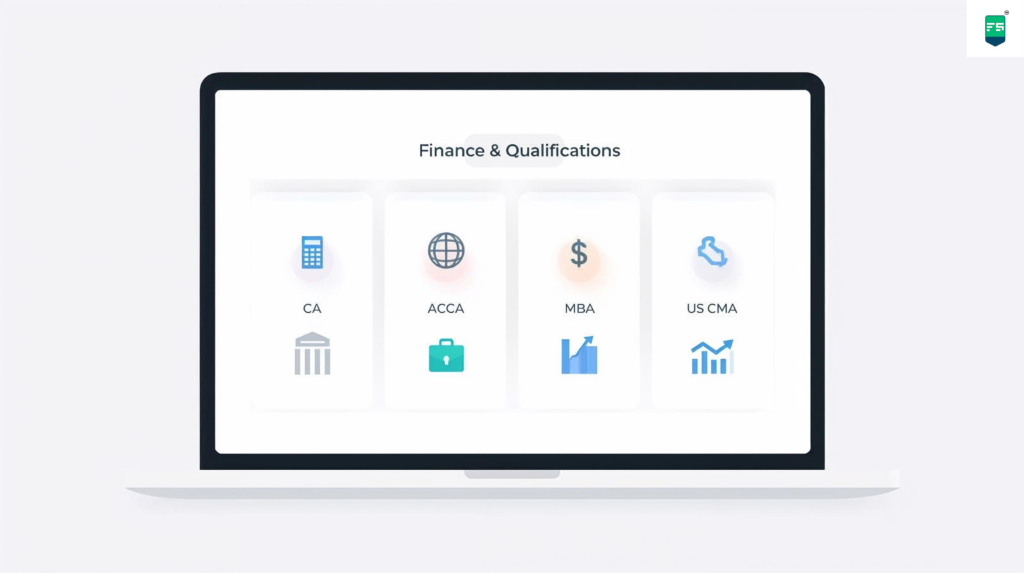
This shift explains why global certifications like US CMA and ACCA are increasingly preferred. Both qualifications emphasize management accounting, strategic finance, governance, and decision support. You can explore how the US CMA prepares professionals for these roles at
https://www.finstreet.in/us-cma
Management and Strategic Accountants as Decision Enablers
One of the key reasons employers value management accountants is their ability to enable decisions rather than simply report outcomes. Financial data alone does not drive growth. Insight does.
For example, when raw material prices increase, a bookkeeper records higher costs. A management accountant analyzes the impact on margins, evaluates supplier alternatives, and recommends pricing or cost control strategies. During economic uncertainty, strategic accountants perform scenario analysis and help leadership prepare for multiple outcomes.
This ability to translate numbers into actionable insights is critical in today’s fast changing business environment. Employers rely on management accountants to guide decisions that directly impact profitability and sustainability.
Why Strategic Accounting Skills Are Hard to Automate
Automation thrives on rules and patterns. Strategic accounting thrives on judgment, context, and experience. While software can generate forecasts, it cannot fully understand business nuances such as customer behavior, competitive positioning, or regulatory risk.
Management and strategic accountants bring human judgment to financial analysis. They ask the right questions, challenge assumptions, and consider non financial factors such as operational constraints and ethical implications. Employers recognize that these skills cannot be easily replicated by technology.
This is why automation is actually increasing demand for strategic accountants. As routine tasks disappear, the value of higher order thinking increases.
Bookkeepers vs Management Accountants: Employer Perspective
The following table highlights why employers increasingly prioritize management and strategic accountants over traditional bookkeeping roles.
| Aspect | Bookkeepers | Management and Strategic Accountants |
|---|---|---|
| Primary focus | Recording transactions | Driving business decisions |
| Time orientation | Past oriented | Future oriented |
| Use of automation | High dependency | Strategic use of insights |
| Role in strategy | Limited | Direct involvement |
| Value to leadership | Operational support | Strategic partnership |
| Career scalability | Limited growth | Leadership potential |
This comparison clearly explains employer preferences in the modern finance function.
Why US CMA and ACCA Fit Employer Expectations
US CMA and ACCA are designed for the evolving finance role. They move beyond traditional accounting and focus on management, strategy, and governance. Employers value these qualifications because they signal readiness for complex business environments.
US CMA focuses heavily on financial planning, performance management, cost analysis, and decision support. ACCA offers strong exposure to global standards, ethics, and strategic management. Together, these certifications represent the shift from bookkeeping to strategic finance.
At FinStreet, training for US CMA and ACCA is aligned with real world employer needs. Candidates are exposed to practical case studies and business scenarios that reflect actual workplace challenges. Learn more about FinStreet’s approach at
https://www.finstreet.in
Strategic Accountants and Business Leadership
Another reason employers prefer management accountants is their leadership potential. Strategic accountants often progress into roles such as finance manager, business controller, FP&A lead, and eventually CFO.
Because they understand both numbers and business operations, they communicate effectively with non finance stakeholders. This cross functional ability makes them valuable leaders within organizations. Employers invest in management accountants because they see them as future decision makers, not just support staff.
US CMA professionals, in particular, are known for their leadership orientation. Their training emphasizes ethics, internal controls, and enterprise wide thinking. Explore career outcomes for US CMA professionals at
https://www.finstreet.in/us-cma-careers
The Employer’s Cost and Value Perspective
From a cost perspective, employers aim to reduce spending on low value activities while investing in roles that drive growth. Automation reduces the cost of bookkeeping. Strategic accountants justify their cost by improving profitability, efficiency, and risk management.
A single strategic decision guided by a management accountant can save or generate millions for an organization. Employers clearly understand this return on investment. This is why management accounting roles are expanding even as bookkeeping roles decline.
Students considering finance careers can understand this shift better by exploring why strategic certifications matter at
https://www.finstreet.in/why-us-cma
Long Term Career Security in Strategic Accounting
Career security today depends on relevance. Bookkeeping skills alone are becoming insufficient. Management and strategic accounting skills offer adaptability across industries and economic cycles.
Whether in manufacturing, consulting, banking, or technology, organizations need professionals who can plan, analyze, and advise. This makes strategic accountants more resilient to market changes and technological disruption.
US CMA and ACCA professionals benefit from this adaptability, making them attractive to employers globally.
Conclusion: Employers Want Thinkers, Not Just Record Keepers
The finance profession is not shrinking. It is evolving. Employers no longer value accounting professionals solely for their ability to record transactions. They value those who can interpret data, guide decisions, and support strategy.
Management and strategic accountants represent the future of finance. They are decision enablers, business partners, and future leaders. Certifications like US CMA and ACCA prepare professionals for this reality by focusing on strategic thinking and business impact.
For students and professionals worried about automation and job security, the message is clear. Move beyond bookkeeping. Invest in strategic finance skills. With expert guidance and industry aligned training from FinStreet, you can build a finance career that employers truly value. Start your journey today at
https://www.finstreet.in