
ACCA After Graduation vs ACCA Alongside Graduation: Which Path Works Better

Introduction
For aspiring finance professionals, deciding when to start ACCA (Association of Chartered Certified Accountants) is one of the most important career decisions. Should you complete your graduation first and then pursue ACCA, or begin ACCA alongside your undergraduate studies?
Both approaches have advantages and challenges, and the choice depends on your career goals, personal discipline, and timeline for entering the workforce. Understanding these factors is crucial because ACCA is more than a certification—it is a career accelerator that opens doors to global finance roles, strategic positions, and leadership opportunities.
In this blog, we explore the pros and cons of both paths, highlight practical considerations, and explain how Finstreet’s flexible and structured approach helps students succeed in either scenario.
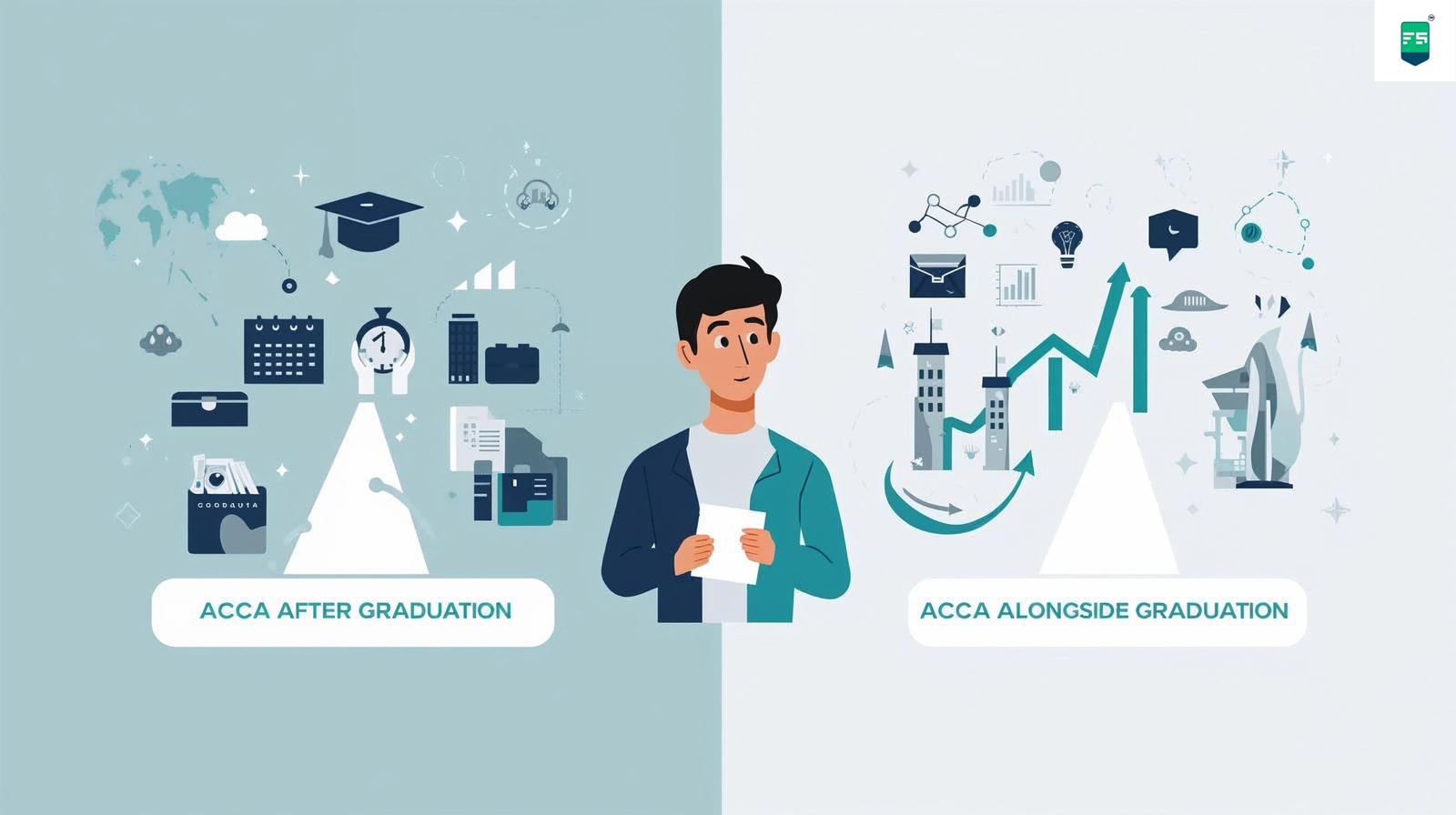
Path 1: ACCA After Graduation
Advantages
- Focused Learning: Students can concentrate solely on ACCA without juggling college coursework, assignments, or exams.
- Clearer Career Goals: Graduates often have a better understanding of their interests and career paths, which helps them choose the ACCA papers relevant to their aspirations.
- Professional Exposure: Many students take up internships or articleship after graduation, providing practical context that enhances ACCA learning.
- Time Management: With no college timetable, students can dedicate longer hours to preparation, increasing the likelihood of faster completion.
Challenges
- Entering the workforce later compared to peers who started ACCA early
- May feel pressure to quickly secure a job post-certification
- Delayed professional networking opportunities during graduation years
Finstreet’s program supports post-graduation students by providing structured study plans, mentorship, and practical insights, helping them accelerate both certification and career entry
https://www.finstreet.in
Path 2: ACCA Alongside Graduation
Advantages
- Head Start: Students complete ACCA papers early, often entering the workforce with professional credentials immediately after graduation.
- Competitive Edge: ACCA-qualified graduates are highly attractive to multinational corporations and Big4 firms, often receiving higher starting offers.
- Practical Integration: Concepts learned in ACCA can complement college subjects, deepening understanding of finance and accounting principles.
- Early Exposure to Career Opportunities: Starting ACCA early helps build a professional network even before graduation.
Challenges
- Balancing college workload and ACCA study can be stressful
- Risk of burnout if not well-organized
- Limited time for internships or practical experience if not managed properly
Finstreet assists students pursuing ACCA alongside graduation by creating customized schedules, simplifying complex concepts, and offering mentorship to maintain work-life-study balance
https://www.finstreet.in/about-us
Comparison: Which Path Works Better?
| Factor | ACCA After Graduation | ACCA Alongside Graduation |
| Time Management | Easier focus on exams | Requires juggling college + ACCA |
| Early Career Advantage | Slightly delayed entry | Immediate professional edge post-graduation |
| Stress Level | Lower, single focus | Higher, risk of burnout if not managed |
| Practical Exposure | Can combine with internship | Limited during college, but early learning advantage |
| Completion Speed | Potentially faster if fully focused | Can be slower due to divided attention |
Key Insight: Both paths can lead to global finance roles and leadership positions. Success depends on discipline, guidance, and support.
Real-World Example
A BCom student at Finstreet chose to pursue ACCA alongside graduation. With careful scheduling and weekly mentorship sessions, they completed 2 ACCA papers each year while excelling academically. By graduation, they had cleared all Knowledge and Skills level papers, giving them a head start in securing an FP&A role at an MNC.
Meanwhile, another student waited until after graduation to start ACCA. With full focus, they completed all exams in record time, combined with a 6-month internship, which helped them secure a managerial role within a year.
Both approaches worked—what mattered most was structured planning and guidance, which Finstreet ensures for all students
https://www.finstreet.in/placements
How Finstreet Supports Both Paths
Finstreet differentiates itself by offering a flexible, student-centric approach:
- Personalized Study Plans: Tailored schedules for college students or graduates
- Mentorship & Doubt Solving: Continuous guidance to maintain motivation and clarity
- Practical Application: Real-world examples help integrate learning for immediate career use
- Placement Support: Assistance in securing internships and job opportunities aligned with ACCA skills
Whether a student starts ACCA alongside graduation or after, Finstreet ensures accelerated learning and career readiness
https://www.finstreet.in
Conclusion
Both ACCA after graduation and ACCA alongside graduation offer unique advantages.
- After graduation: Allows focused learning, practical exposure through internships, and a lower-stress approach.
- Alongside graduation: Provides early professional advantage, faster career entry, and a competitive edge for global finance roles.
Success in either path requires structured planning, discipline, and mentorship. Finstreet offers exactly that—a comprehensive support system that guides students through exams, practical application, and placement, ensuring they transition from learners to strategic finance professionals efficiently.
Ultimately, the right path depends on your personal circumstances, career goals, and readiness for balancing study and work, and with Finstreet’s support, either choice can lead to a rewarding global finance career.
Explore Finstreet’s ACCA programs here:
https://www.finstreet.in